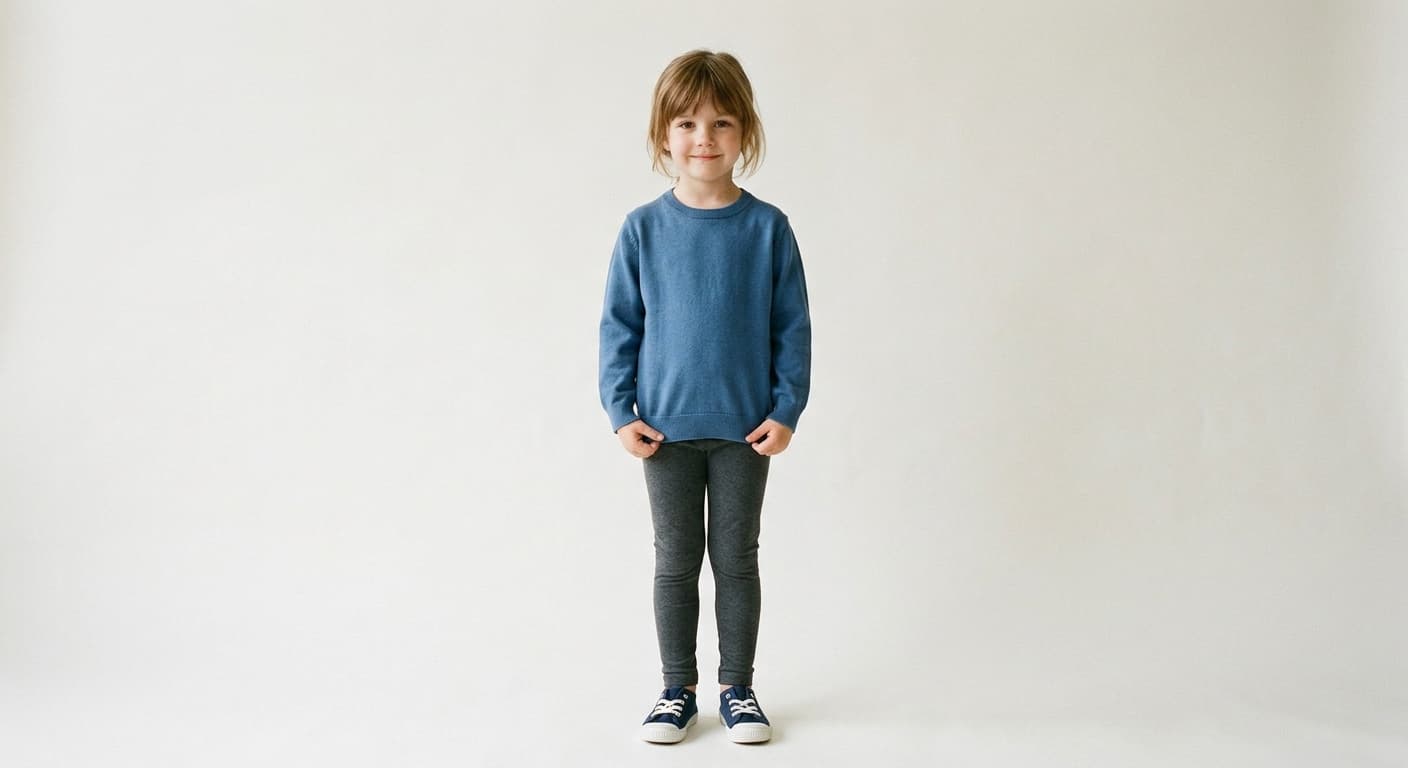
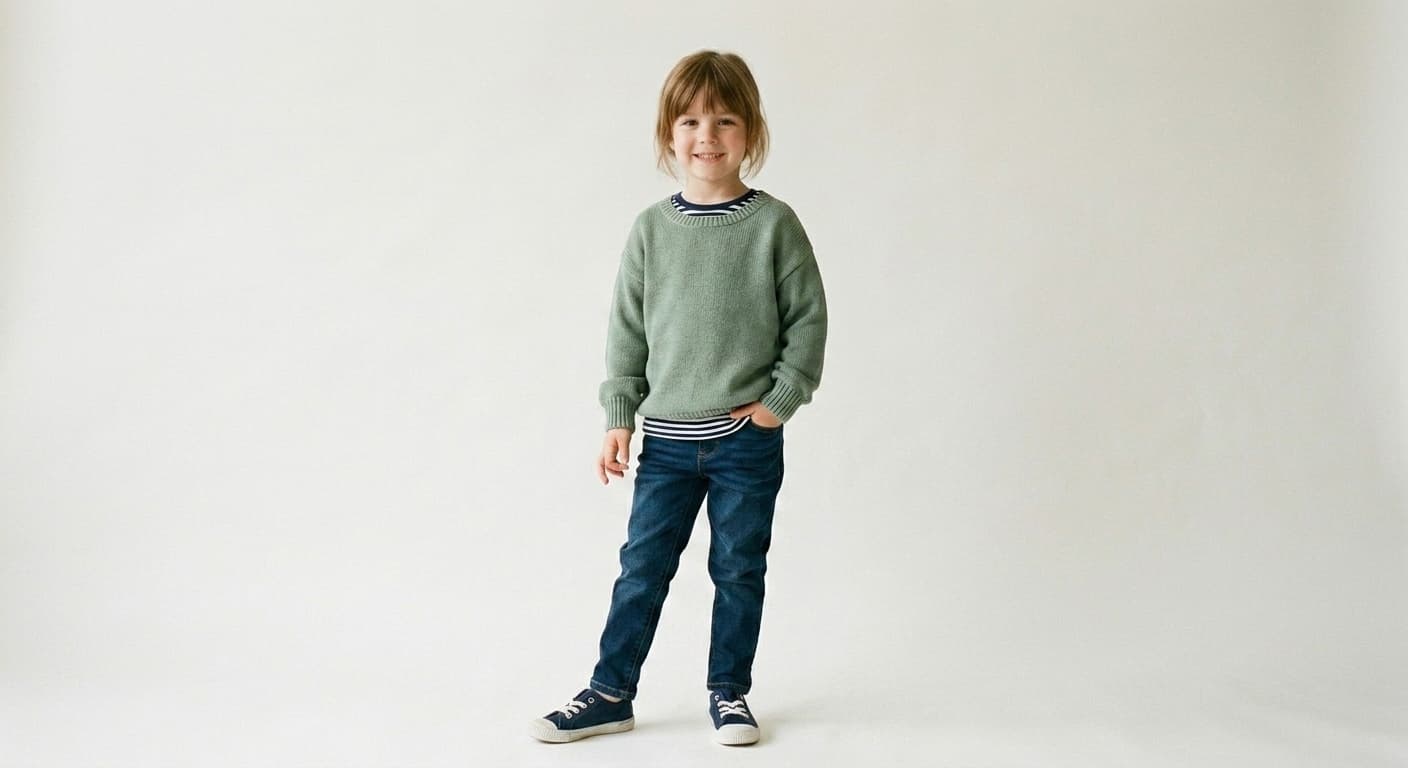
Kids Clothing Size Chart by Age
Find the right clothing size for children aged 2 to 14. Our chart maps US, UK, and EU sizes to age, height, and weight so you can shop confidently across international brands.
Quick Converter
| Age | US Size | UK Size | EU Size | Height (cm) | Weight (lbs) |
|---|---|---|---|---|---|
| 2 | 2T | 2-3 | 92 | 84-89 | 27-30 |
| 3 | 3T | 3-4 | 98 | 89-97 | 30-33 |
| 4 | 4T | 4-5 | 104 | 97-104 | 33-37 |
| 5 | 5 | 5-6 | 110 | 104-110 | 37-42 |
| 6 | 6 | 6-7 | 116 | 110-116 | 42-46 |
| 7 | 6X-7 | 7-8 | 122 | 116-122 | 46-50 |
| 8 | 7-8 | 8-9 | 128 | 122-128 | 50-56 |
| 9 | 8-9 | 9-10 | 134 | 128-134 | 56-63 |
| 10 | 10 | 10-11 | 140 | 134-140 | 63-70 |
| 11 | 11 | 11-12 | 146 | 140-146 | 70-78 |
| 12 | 12 | 12-13 | 152 | 146-152 | 78-86 |
| 13 | 14 | 13-14 | 158 | 152-158 | 86-95 |
| 14 | 16 | 14-15 | 164 | 158-164 | 95-105 |
Click any row to highlight it. Sizes are approximate and may vary by brand.
Understanding Children's Sizing Systems
US Sizing
US children's sizes use a combination of age-based labels for toddlers (2T, 3T, 4T) and numeric sizes for older kids (5-16). The "T" in toddler sizes indicates a slimmer cut designed for diaper-wearing children. Once kids outgrow toddler proportions around age 5, they move into standard numbered youth sizes.
UK Sizing
UK sizes for children are expressed as age ranges such as 2-3, 4-5, or 6-7. These ranges account for the natural variation in growth rates between children. UK brands tend to size slightly more generously than US brands, so if your child is between UK age ranges, the smaller range often fits well.
EU Sizing
European sizes are based on the child's height in centimeters, making them the most objective system. A size 128, for example, is designed for a child approximately 128 cm tall. This measurement-based approach removes guesswork and is especially useful when shopping from international retailers online.
How to Measure Your Child
Height
Have your child stand straight against a wall with bare feet. Place a flat object on top of their head touching the wall and mark the spot. Measure from the floor to the mark.
Chest
Wrap a soft tape measure around the fullest part of the chest, under the arms. Keep the tape level and snug but not tight. Record the measurement in inches or centimeters.
Weight
Weigh your child in light clothing without shoes. If between two sizes, choose the larger size to allow room for growth and comfort during active play.
Frequently Asked Questions
Should I buy clothes based on my child's age or measurements?
Measurements are always more reliable. Children of the same age can vary significantly in height and weight. Use age as a starting point, then confirm with actual height and weight measurements for the best fit.
How much room for growth should I allow?
A good rule of thumb is to buy one size up from their current measurements. Children grow quickly, and slightly larger clothing will last longer. Avoid going more than one size up, as overly baggy clothes can be uncomfortable and restrict movement.
Do UK and US kids' sizes match?
Not exactly. While both use numbered systems, UK sizes typically run about one size smaller than US sizes for the same age group. EU sizing uses the child's height in centimeters, making it the most objective system. Always refer to a conversion chart when buying across regions.
When should my child transition from toddler to youth sizes?
Most children transition from toddler sizes (2T-5T) to youth sizes around age 5 or 6, when they reach approximately 110 cm (43 inches) tall. The shift usually happens when toddler sizes no longer accommodate their height, even if the waist still fits.
See How Clothes Actually Look Before You Buy
Use our AI-powered virtual try-on tools to visualize garments on different body types and sizes. Stop guessing and start seeing the fit in real time.